How To Sync Notion Pages With Webflow CMS Without Manual Copying
Stop copy-pasting your blog posts. If you write in Notion but publish in Webflow, there’s a faster, cleaner, and SEO-friendlier way to keep everything in sync—without manual work.
Meet SyncFlow, a Notion–Webflow sync that maps your Notion database to your Webflow CMS collection and automatically publishes updates in real time. Write in Notion — Design in Webflow.
- Try SyncFlow: https://syncflow.ybouane.com/

Why sync Notion to Webflow (instead of copy-paste)
If you’re building a high-performing content engine, speed and consistency matter. Syncing Notion pages directly to your Webflow CMS helps you:
- Eliminate manual copying: No more format fixes, broken links, or image re-uploads.
- Keep your site fresh: Auto-publish updates when you edit in Notion.
- Maintain structure: Map Notion properties (title, summary, tags, images, URLs) to Webflow CMS fields.
- Preserve formatting: Headings, lists, images, quotes, callouts, code blocks, and even TeX math are supported.
- Scale content operations: One source of truth for your team, with clean output in Webflow.
What SyncFlow does for you
- Auto-Sync and Auto-Publish: Push changes from Notion to Webflow automatically, or trigger manual syncs when you want.
- Versatile field support: Text, rich text, images, checkboxes, dates, relations, URLs, and more.
- Page linking: Links between Notion pages become links between Webflow posts.
- Code highlighting: Code blocks stay highlighted for developer docs.
- TeX support: Math expressions render beautifully for academic or technical content.
- Style control: Import Notion elements with inline styles or map them to Webflow classes for total design control.
How to sync Notion pages with Webflow CMS (step-by-step)
Follow these steps to set up your Notion–Webflow sync in minutes:
1) Visit SyncFlow and Get Started
- Go to https://syncflow.ybouane.com/ and click Get Started.
2) Grant Access
- Approve access to your Webflow sites when prompted.
3) Create/Log In to Your SyncFlow Account
- Sign up or log in to manage your syncs.
4) Launch the SyncFlow App in Webflow
- Open Webflow Designer and launch the SyncFlow app.
5) Connect Your Notion Workspace
- In SyncFlow, click Connect Notion and select the page or folder you want to sync.
6) Create a Sync Task
- Click Sync a new database in SyncFlow.
7) Choose a Webflow CMS Collection
- Pick the collection (e.g., Blog Posts) that will receive entries from Notion.
8) Select or Create a Notion Database
- Choose an existing Notion database, or let SyncFlow create one for you. If new, fields are set up automatically.
9) Map Fields Precisely
- Map each Notion property to its Webflow counterpart: title, slug, main image, summary, body content, tags, author, publish date, canonical URL, etc.
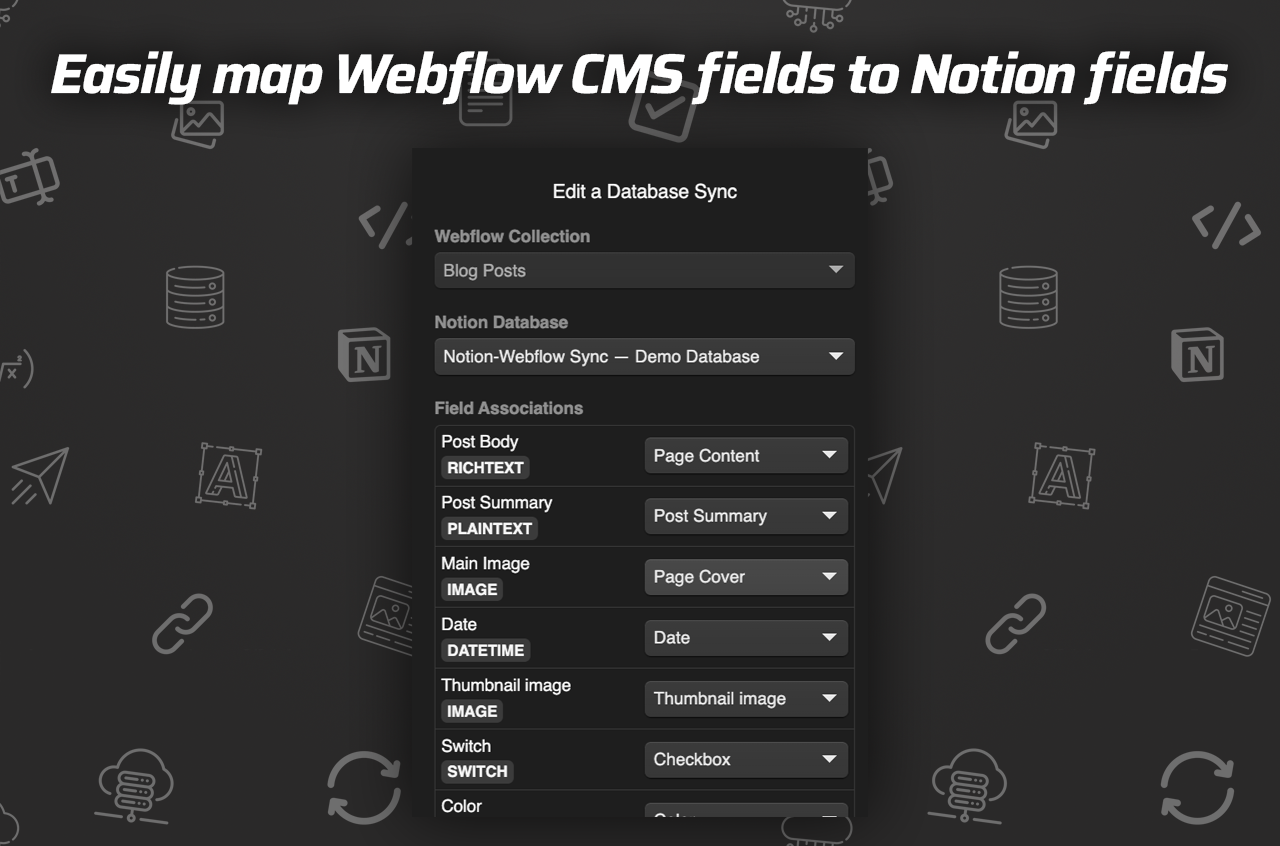
10) Configure Sync Settings
- Auto-Publish: Instantly publish changes to your site.
- Auto-Sync: Sync on every Notion change, no manual steps.
- Code highlighting: Preserve developer-friendly formatting.
- Math rendering: Enable TeX for scientific/academic posts.
- Styling mode: Choose Inline Styles for speed or Use Classes to fine-tune styling in Webflow.
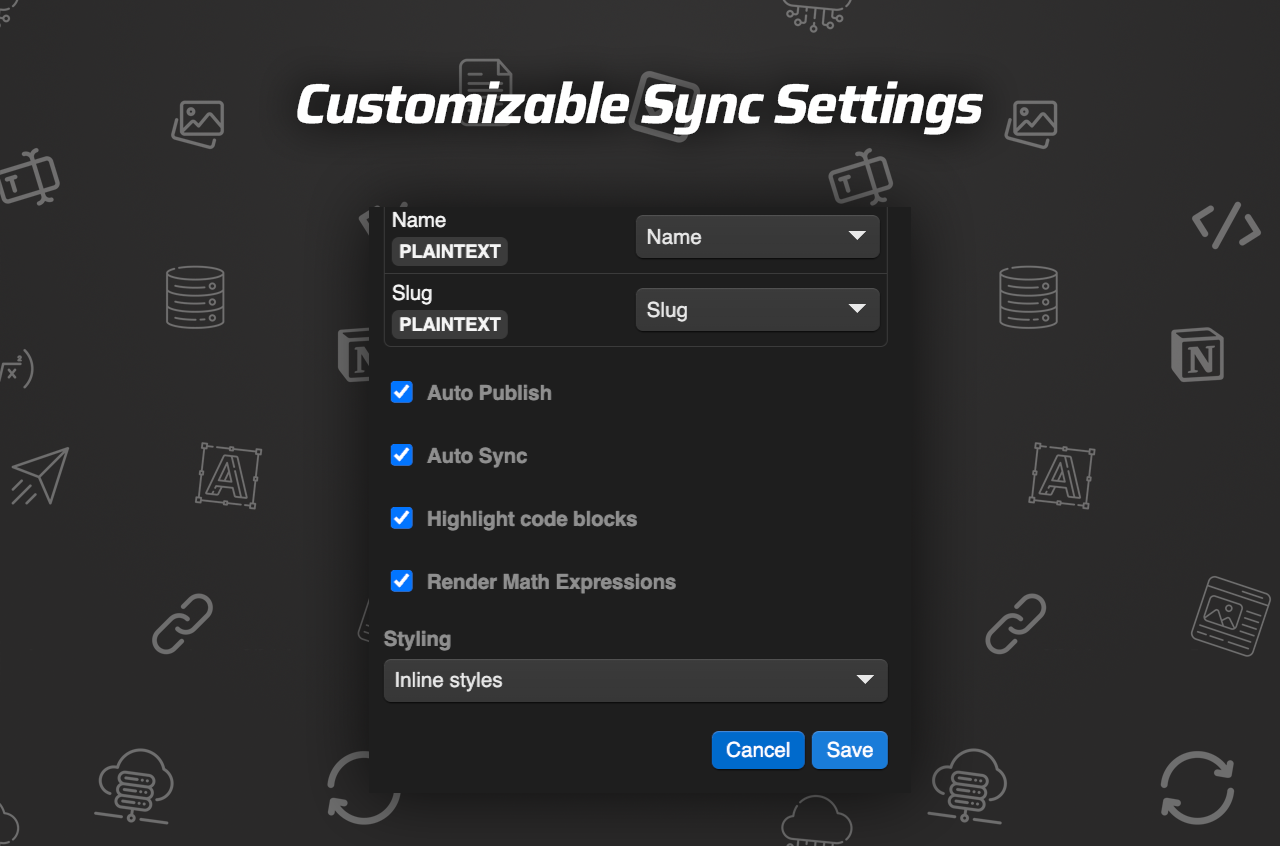
11) Save and Verify
- Save your settings. Create a test entry in Notion and confirm it appears in your Webflow CMS collection.
12) Optional: Full Resync
- Use Full Resync to align your entire Webflow collection with the chosen Notion database if you’re migrating existing content.
Watch the full walkthrough
- Full Tutorial (video): https://www.youtube.com/watch?v=_890vYoe3KQ
- Trailer: https://www.youtube.com/watch?v=HGjBCLL3anc
SEO best practices for a clean Notion → Webflow workflow
- Control your slugs: Add a Notion property for slug and map it to Webflow’s slug field. Keep them short, descriptive, and keyword-driven.
- Titles and H1s: Use a single H1 in your Notion content. Map post titles to Webflow title fields; avoid multiple H1s.
- Meta data: Create Notion properties for meta title, meta description, and canonical URL. Map them to Webflow for consistent SEO.
- Alt text for images: Add an image caption/alt property in Notion and map it to the Webflow image alt field.
- Categories and tags: Use select/multi-select properties in Notion for taxonomy. Map them to Webflow references or plain text fields.
- Internal linking: Link Notion pages together—SyncFlow automatically converts them into internal links between Webflow posts.
- Structured content blocks: Use headings, lists, quotes, callouts, code blocks, and math where needed; SyncFlow preserves structure and formatting.
Common setup questions and troubleshooting
- Nothing is syncing—did I grant access? Ensure you approved access to both your Webflow site and selected Notion workspace.
- Field mismatch errors: Double-check property types. For example, map Notion date → Webflow date, files → image fields, text → plain or rich text fields.
- Duplicate slugs: Enforce unique slugs in Notion. If a duplicate exists in Webflow, adjust the Notion slug and re-sync.
- Images not appearing: Confirm your Notion image property is mapped to a Webflow image field. Use supported image blocks or file properties.
- Styling isn’t matching my design system: Switch to Use Classes mode and style each class in Webflow for pixel-perfect control.
- Large updates: Use Full Resync to reconcile the entire collection after major structure changes.
- Code and math not rendering: Enable code highlighting and TeX rendering in Sync Settings, then re-sync.
Pricing: simple and scalable
- Standard Plan — $8/month
- 1 Webflow site install
- Unlimited syncs
- Unlimited databases
- Unlimited connected fields
Start your first sync in minutes
Replace manual copying with a reliable, SEO-friendly pipeline. Write in Notion, publish in Webflow—automatically.
- Get started now: https://syncflow.ybouane.com/
- Follow the tutorial: https://www.youtube.com/watch?v=_890vYoe3KQ
Pro tip: For teams, create a Notion content template with fields for title, slug, summary, featured image, author, publish date, meta title, meta description, canonical URL, tags, and body. Map them once in SyncFlow, enable Auto-Sync + Auto-Publish, and your entire editorial workflow runs on autopilot.

Comments
Post a Comment