How To Sync Notion Database Items To Webflow CMS Without Errors
If you’ve ever tried moving content from Notion to Webflow CMS by hand, you know where the errors creep in: mismatched fields, broken images, duplicate slugs, and formatting that mysteriously disappears. The fastest way to sync Notion database items to Webflow CMS without errors is to use SyncFlow — a purpose-built Notion–Webflow sync tool that automates mapping, validation, and publishing.
SyncFlow lets you map Notion properties to Webflow CMS fields, auto-sync updates, auto-publish, and even preserve code blocks and math. Start here: SyncFlow — Notion-Webflow Sync: https://syncflow.ybouane.com/
What you’ll learn in this guide:
- How to set up a reliable Notion → Webflow CMS sync
- A pre-sync checklist that prevents the most common errors
- Field mapping best practices for slugs, images, dates, and rich text
- Troubleshooting tips for zero-downtime content operations

Why SyncFlow is the safest route for error-free sync
- Auto-Sync and Auto-Publish: Ensure Webflow reflects every approved change in Notion.
- Precise Field Mapping: Connect text, images, checkboxes, dates, URLs, and more, 1:1.
- Code Highlighting and TeX: Preserve developer docs and academic content without post-editing.
- Page Linking: Notion page links automatically become internal Webflow links.
- Custom Styling: Import inline styles or use classes to fully control your Webflow design.
Explore SyncFlow: https://syncflow.ybouane.com/
Pre-sync checklist to avoid 90% of errors 1) Confirm access and permissions
- Webflow: Ensure you have Designer access and the right site selected.
- Notion: Share the exact Notion database with the SyncFlow integration (Settings → Connections → Share). If the database isn’t shared, SyncFlow can’t read it.
2) Cleanly define your Notion database
- Create dedicated properties for each field you need in Webflow (e.g., Title, Summary, Featured Image, Slug, Tags, Publish?).
- Keep property types aligned with Webflow field types whenever possible (text → Plain Text, long content → Rich Text, checkbox → Boolean, date → Date/Time, files → Images, URL → Link).
3) Plan a slug strategy
- Use a Notion Formula property to generate slugs consistently. Example formula: replaceAll(lower(prop("Title")), " ", "-")
- Avoid special characters; ensure uniqueness to prevent Webflow “slug already exists” errors.
4) Prepare images
- Use a Notion Files & Media property for featured images. Ensure images are accessible and not removed after upload.
5) Respect Webflow collection rules
- Keep required fields present (e.g., Name, Slug). Don’t exceed your collection’s field limits and item constraints.
Step-by-step: How to sync Notion items to Webflow CMS 1) Install and connect
- Visit https://syncflow.ybouane.com/ and click Get Started.
- Approve access to your Webflow sites, then create or log into your SyncFlow account.
- In Webflow Designer, launch the SyncFlow app.
2) Connect Notion
- In SyncFlow, click Connect Notion and select the workspace + specific page or folder.
- Share your target Notion database with SyncFlow.
3) Create a sync task
- Click Sync a new database.
- Choose the Webflow CMS Collection you want to populate.
- Select your Notion database. If needed, allow SyncFlow to create matching fields.
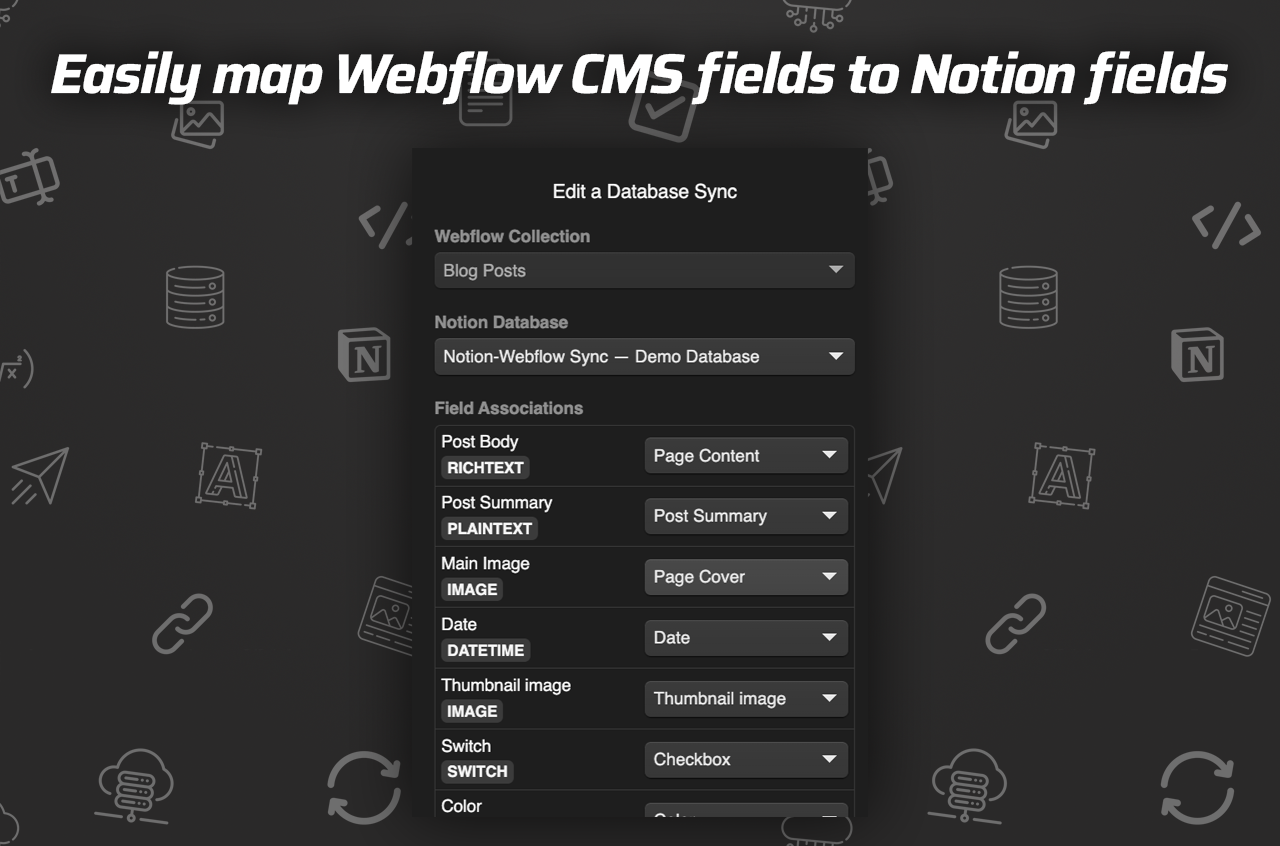
4) Map fields precisely
- Map Notion properties to Webflow CMS fields. Keep types aligned (text → text, URL → link, file → image, etc.).
5) Fine-tune sync settings
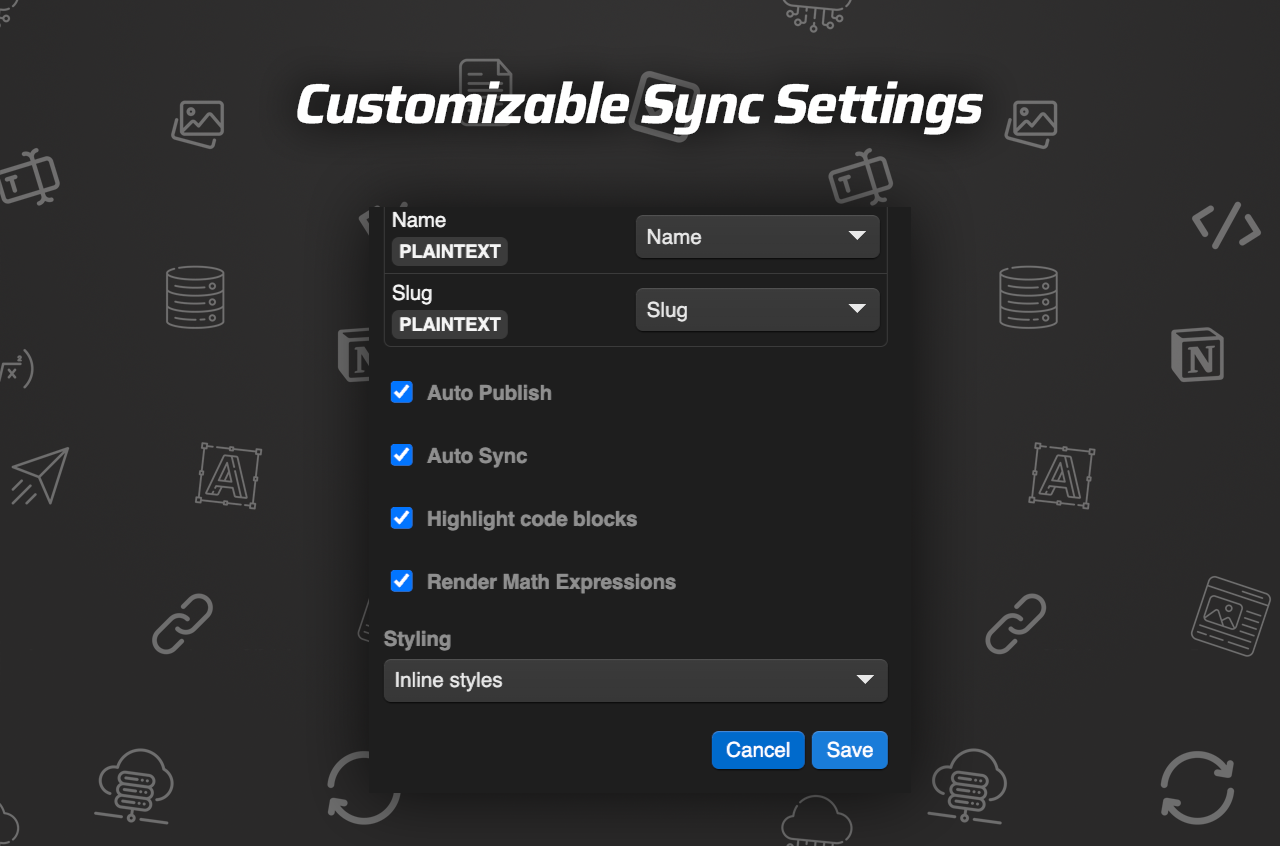
- Enable Auto-Sync so new/updated Notion pages flow into Webflow.
- Toggle Auto-Publish if you want changes to go live automatically.
- Turn on Code Highlighting and TeX if your content includes code or math.
- Styling: choose Inline Styles for speed or Use Classes for pixel-perfect Webflow control.
6) Save and verify
- Save settings, create a test item in Notion, and watch its sync status in SyncFlow.
- Check the Webflow CMS collection for the new item after a brief processing window.
7) Optional: Full Resync
- If you’re aligning an existing collection, run a full resync in SyncFlow to make every item match the Notion database.
Watch the full tutorial: https://www.youtube.com/watch?v=_890vYoe3KQ
Field mapping best practices to prevent errors
- Title and Name: Map your Notion Title to the Webflow Name field. Keep it concise and human-readable.
- Slug: Map a Notion formula-based Slug property to the Webflow Slug field. Ensure uniqueness and lowercase-hyphen format.
- Rich Text Body: Use a Notion rich-text property for body content. SyncFlow preserves headings, lists, images, quotes, and supports code blocks + TeX with the right settings enabled.
- Images: Use a dedicated Notion Files & Media property for the featured image. Keep one primary image per item if your Webflow field expects one.
- Dates: Map Notion Date to a Webflow Date field. Check timezone consistency when scheduling or sorting posts.
- Booleans (checkboxes): Use for featured flags (e.g., “Featured?”) or publish toggles you might use in Webflow Conditions.
- Links: Validate external URLs in Notion to avoid broken links in production.
Pro formatting features for better UX and SEO
- Code Highlighting: If you publish technical articles, enable this so your syntax remains readable.
- TeX Support: For academic or data-heavy content, equations render cleanly in Webflow.
- Page Linking: Internal links between Notion pages are converted to internal Webflow links, preserving structure and reducing 404s.
- Classes vs Inline: Choose Use Classes to maintain design consistency and let your Webflow style guide drive the final look.
Common errors and how to fix them fast
- Authentication/Permission errors: Reconnect accounts in SyncFlow and make sure the Notion database is shared with the integration.
- Slug already exists: Adjust the Notion slug formula to enforce uniqueness (e.g., append a short ID) and re-sync.
- Unsupported or mismatched field type: Change the Notion property type or map it to a compatible Webflow field.
- Images not displaying: Ensure images remain attached in Notion and the property is mapped to an Image field in Webflow.
- Structural changes after mapping: If you add or rename fields, update your mapping and run a full resync.
- Content not appearing: Check if Auto-Publish is disabled; items might be in draft. Publish from Webflow or enable Auto-Publish in SyncFlow.
SEO tips when syncing blog posts
- Write in Notion with semantic headings (H2/H3) and descriptive alt text for images.
- Generate clean, keyword-rich slugs based on the title.
- Add meta descriptions and summaries in dedicated Notion properties.
- Use internal links in Notion; SyncFlow will convert them to Webflow links, improving crawlability and dwell time.
Launch your error-free Notion → Webflow workflow With SyncFlow, you get a dependable path from idea to published post—without manual copy/paste or formatting headaches. Map once, enable Auto-Sync, and focus on writing while your Webflow CMS stays perfectly updated.
Get started now: https://syncflow.ybouane.com/
Bonus: Quick-start settings
- Auto-Sync: ON
- Auto-Publish: ON (optional for fast-moving blogs)
- Code Highlighting: ON (if you share code)
- TeX: ON (if you publish math)
- Styling: Use Classes (for design control)
More resources
- Website and setup guide: https://syncflow.ybouane.com/
- Full tutorial video: https://www.youtube.com/watch?v=_890vYoe3KQ
- Product trailer: https://www.youtube.com/watch?v=HGjBCLL3anc

Comments
Post a Comment