How To Sync Notion Pages With Webflow CMS Without Manual Copying
If you have ever copied a blog post from a doc editor into your Webflow CMS, then spent another hour fixing headings, images, code blocks, and links, you know how fragile a manual workflow can be. The good news: you can sync Notion pages to Webflow CMS automatically and publish updates in minutes, not mornings.
This guide shows an end-to-end workflow to sync Notion with Webflow CMS using SyncFlow, a lightweight app that maps your Notion database to a Webflow collection, supports auto-sync and auto-publish, and preserves formatting like code, math, and page links.
- Try SyncFlow: https://syncflow.ybouane.com/
- Watch the full tutorial: https://www.youtube.com/watch?v=_890vYoe3KQ

Why manual copying breaks content operations
- Inconsistent formatting leads to messy headings, spacing, and code snippets.
- Repetitive tasks steal time from writing and SEO optimization.
- Missed updates cause outdated posts or broken links in production.
- Collaboration suffers because content lives in multiple places.
A Notion to Webflow sync centralizes writing where your team already works while keeping Webflow as the source of truth for design and publishing.
Meet SyncFlow: your Notion to Webflow bridge
SyncFlow seamlessly syncs Notion pages with Webflow CMS collections:
- Auto-sync: New or updated pages in Notion appear in Webflow automatically.
- Auto-publish: Optional one-step publishing for real-time updates.
- Versatile field types: Text, images, checkboxes, dates, URLs, and more.
- Styling control: Import with inline styles or map to CSS classes for full control.
- Page linking: Links between Notion pages become internal post links in Webflow.
- Code highlighting: Beautiful syntax highlighting for technical blogs.
- TeX support: Render math expressions for academic or data-heavy posts.
Explore the product and get started: https://syncflow.ybouane.com/
The 3-step overview
1) Install: Connect your Webflow and Notion accounts to the SyncFlow app. 2) Map fields: Link a Webflow CMS collection to a Notion database and map the fields. 3) Sync: Enable auto-sync and optionally auto-publish to go from draft to live in a click.
Step-by-step: How to sync Notion pages to Webflow CMS
Follow these steps to connect your content pipeline end to end.
1) Visit SyncFlow and get started
- Go to https://syncflow.ybouane.com/
- Click Get Started and sign up or log in.
2) Grant access and connect accounts
- Approve access to your Webflow site when prompted.
- In the Webflow Designer, open the SyncFlow app.
- Click Connect Notion and select the Notion workspace and pages you want to sync.
3) Create your first sync task
- In SyncFlow, select Sync a new database.
- Choose the Webflow CMS collection you want to populate.
- Pick an existing Notion database or create a new one; SyncFlow can initialize fields for you.
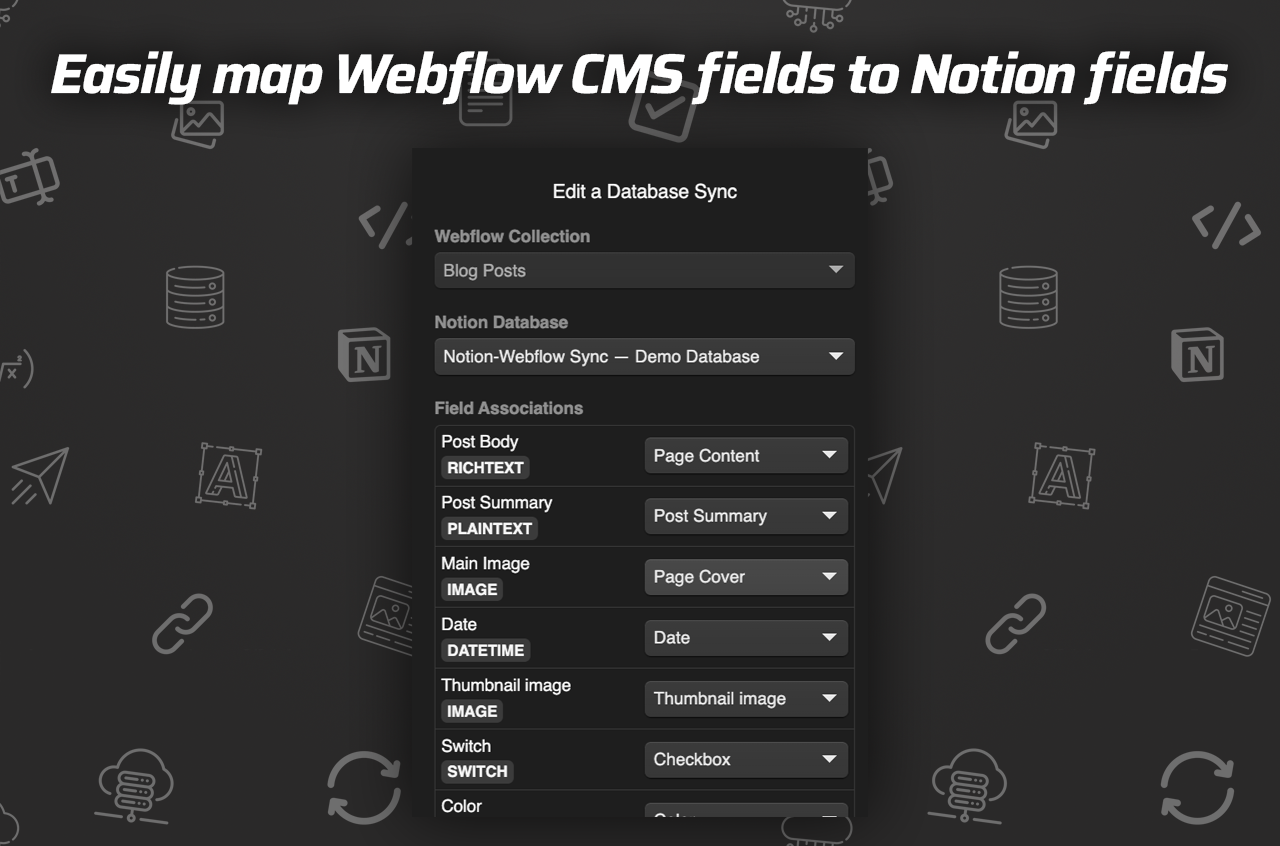
4) Map fields precisely
- Match Notion properties to Webflow fields: Title, Slug, Rich text, Main image, Summary, Tags, Author, Date, and more.
- Pro tip: map a Notion URL or relation field to a Webflow reference or link field to preserve internal linking between posts.
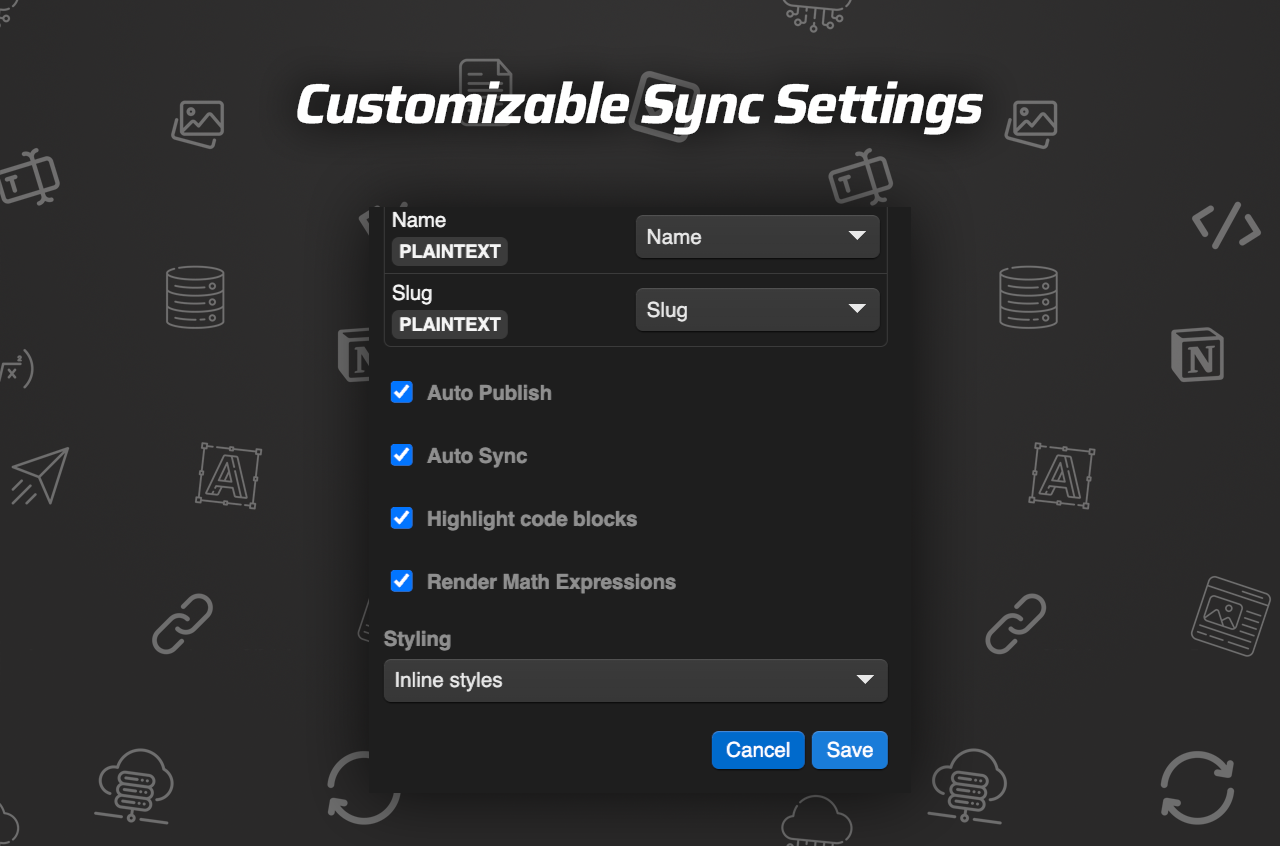
5) Set your sync preferences
- Enable Auto-sync to push changes whenever you update Notion.
- Toggle Auto-publish if you want updates to go live immediately.
- Turn on Code highlighting and TeX rendering for technical or academic content.
- Choose Inline styles for speed or Use classes for full Webflow styling control.
6) Save and verify
- Save your settings.
- Add or update a test page in Notion and check the Webflow collection after a short delay.
- Use Full resync in SyncFlow if you need to backfill an existing database.
7) Publish with confidence
- Review the synced item in Webflow.
- If Auto-publish is off, hit Publish when ready. With Auto-publish on, your updates can be live in real time.
Best practices for a clean, SEO-friendly sync
Structure your Notion database like your CMS
Create properties for Title, Slug, Summary, Main image, Tags, and Publish date.
Keep slugs simple and lowercase for clean URLs.
Design content blocks for the web
Use H2 and H3 headings, short paragraphs, and descriptive alt text for images.
Prefer Notion callouts and quotes where appropriate; they map nicely to styled blocks.
Handle media like a pro
Store a cover or hero image in a dedicated property that maps to your CMS main image.
Inline images within the Notion body will be imported and can inherit Webflow classes when using the Use classes mode.
Maintain consistent linking
Use Notion page links for cross-post references; SyncFlow converts them to internal post links.
For external links, use descriptive anchor text and consider opening in a new tab for user experience.
Optimize technical content
Enable code highlighting and verify language fences in Notion, such as
js orpython.Turn on TeX support for math-heavy posts.
Automate responsibly
If you have a multi-stage editorial workflow, keep Auto-publish off and use a Status property in Notion to signal what should go live.
Troubleshooting and quick fixes
Nothing is syncing
Re-check app permissions in both Webflow and Notion.
Confirm the selected Notion database and Webflow collection match the mapping.
Wrong fields in Webflow
Edit your field mapping in SyncFlow and run a Full resync to align existing entries.
Broken images or missing alt text
Ensure images exist in Notion and that your CMS main image field is properly mapped.
Add alt text in a dedicated Notion property to map to an alt field in Webflow.
Formatting looks off
Switch from Inline styles to Use classes and style the imported classes in Webflow for pixel-perfect control.
Rate limits or delays
Large updates can take a few minutes. Allow time for propagation, then verify in the Webflow CMS.
Pricing and why it is a no-brainer
- Standard plan: 8 USD per month
- One Webflow site install
- Unlimited syncs, databases, and connected fields
For teams publishing multiple times a month, eliminating copy-paste and formatting fixes more than pays for itself. Get started here: https://syncflow.ybouane.com/
Learn by watching
- How to sync Notion with Webflow — Full Tutorial: https://www.youtube.com/watch?v=_890vYoe3KQ
- SyncFlow trailer video: https://www.youtube.com/watch?v=HGjBCLL3anc
Your next step
Replace manual copying with a dependable, no-code pipeline. Write in Notion where collaboration flows. Design and publish in Webflow where your brand shines. Turn on auto-sync and auto-publish with SyncFlow today: https://syncflow.ybouane.com/

Comments
Post a Comment