How I Turn One Product Brief Into Eight Shopify UGC Videos

If I need more ad creative for a Shopify store, the real problem is not ideas. It is getting to a batch of usable variations fast enough to learn something before the campaign goes stale.
That is where Supra UGC Maker helps. It is built for AI-powered Shopify UGC videos, and the workflow is simple enough to keep moving: pick an avatar, set the scene, add the product, write the script, choose the voice, and generate the video. If you want the official app listing, it is here as well: Supra UGC Maker on Shopify.
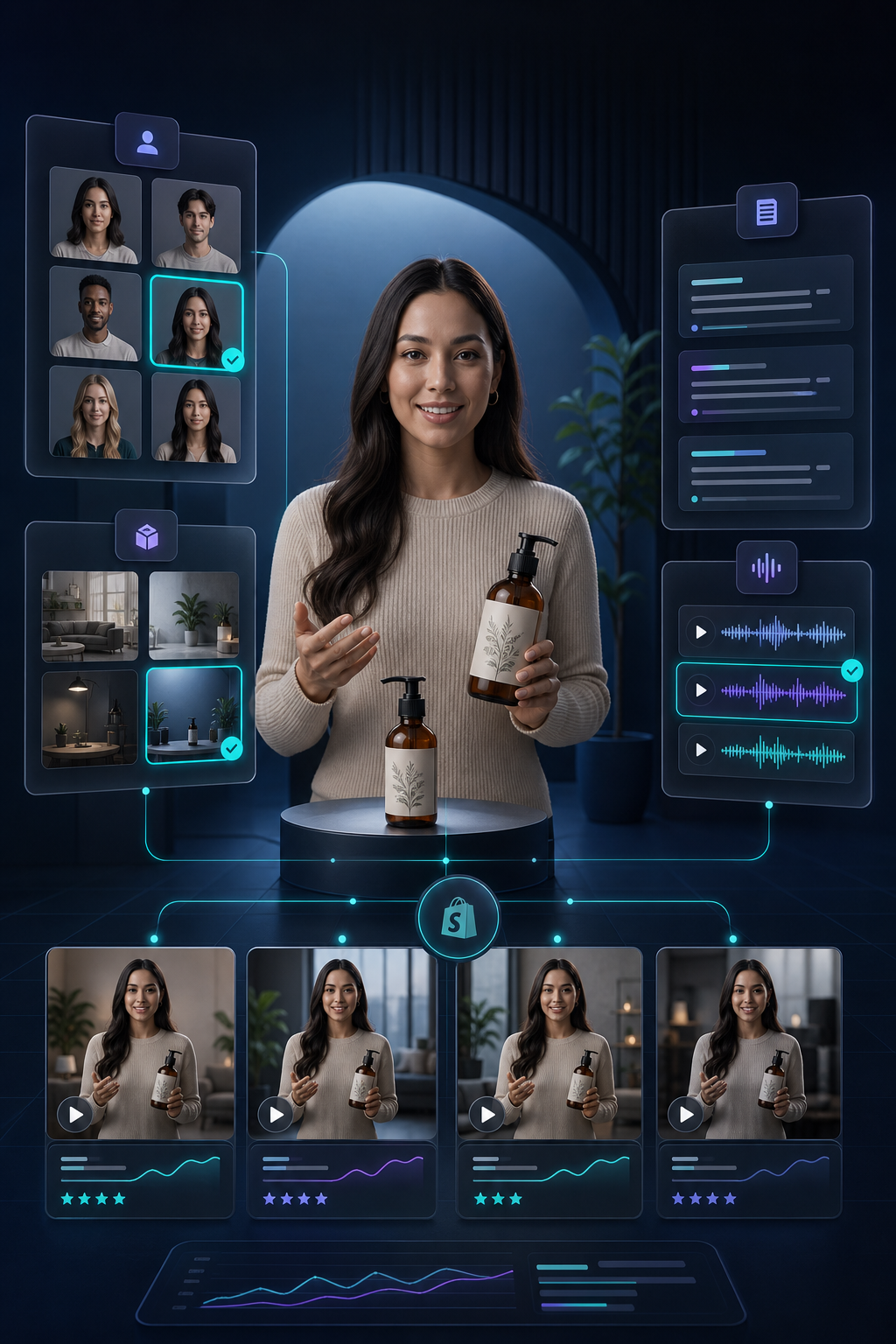
The matrix I start with
When I want eight videos from one brief, I keep the first batch intentionally simple:
- One product
- One audience
- One CTA
- Two scenes
- Four hooks
That gives me eight combinations without introducing too much noise.
- Problem hook + studio scene
- Problem hook + lifestyle scene
- Outcome hook + studio scene
- Outcome hook + lifestyle scene
- Objection hook + studio scene
- Objection hook + lifestyle scene
- Comparison hook + studio scene
- Comparison hook + lifestyle scene
I do not change everything at once. The point is to learn which angle gets the best response, then regenerate the winner with a slightly better hook, a tighter intro, or a different voice tone.
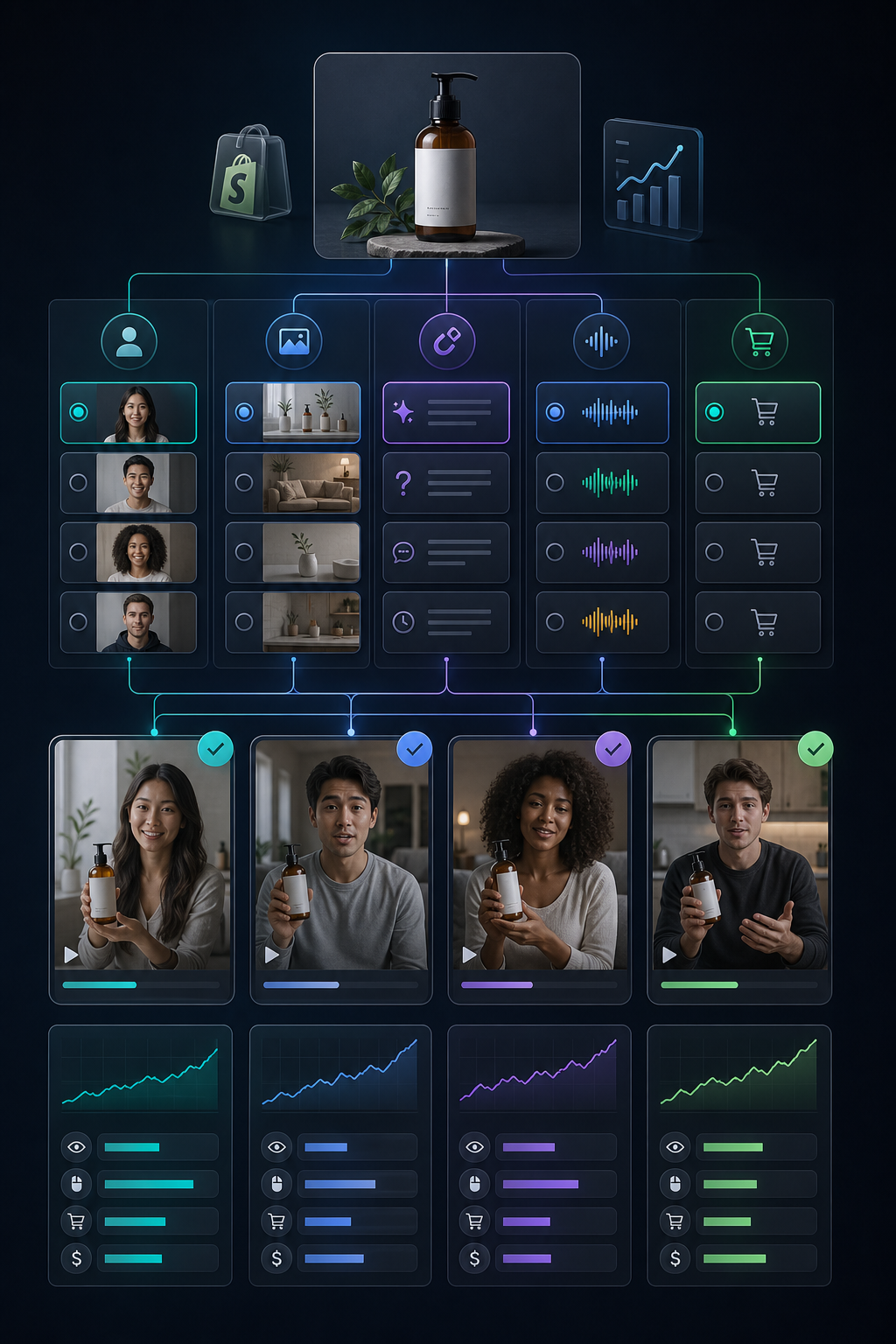
How I write the brief
The brief does not need to be fancy, but it does need to answer the questions that usually get lost in a creative review:
- Who is the shopper?
- What problem are we solving?
- What proof can we show in the first 5 seconds?
- What should the viewer do next?
If I can answer those four questions, I can usually get a first draft fast enough to be useful. Supra UGC Maker is a better fit when I want to test hooks and scenes than when I want to write a brand manifesto. I am using it for speed and variation, not for long-form storytelling.
Then I build the script around one of four hook types:
- Problem-first: call out the pain the product removes
- Outcome-first: lead with the result the shopper wants
- Objection-first: answer the doubt that stops the click
- Comparison-first: show why this option is easier than the alternative
For the first batch, I keep the voice and tone close to the same script structure so the test is readable. Once I see a winner, I can swap the tone or avatar and run a second pass.
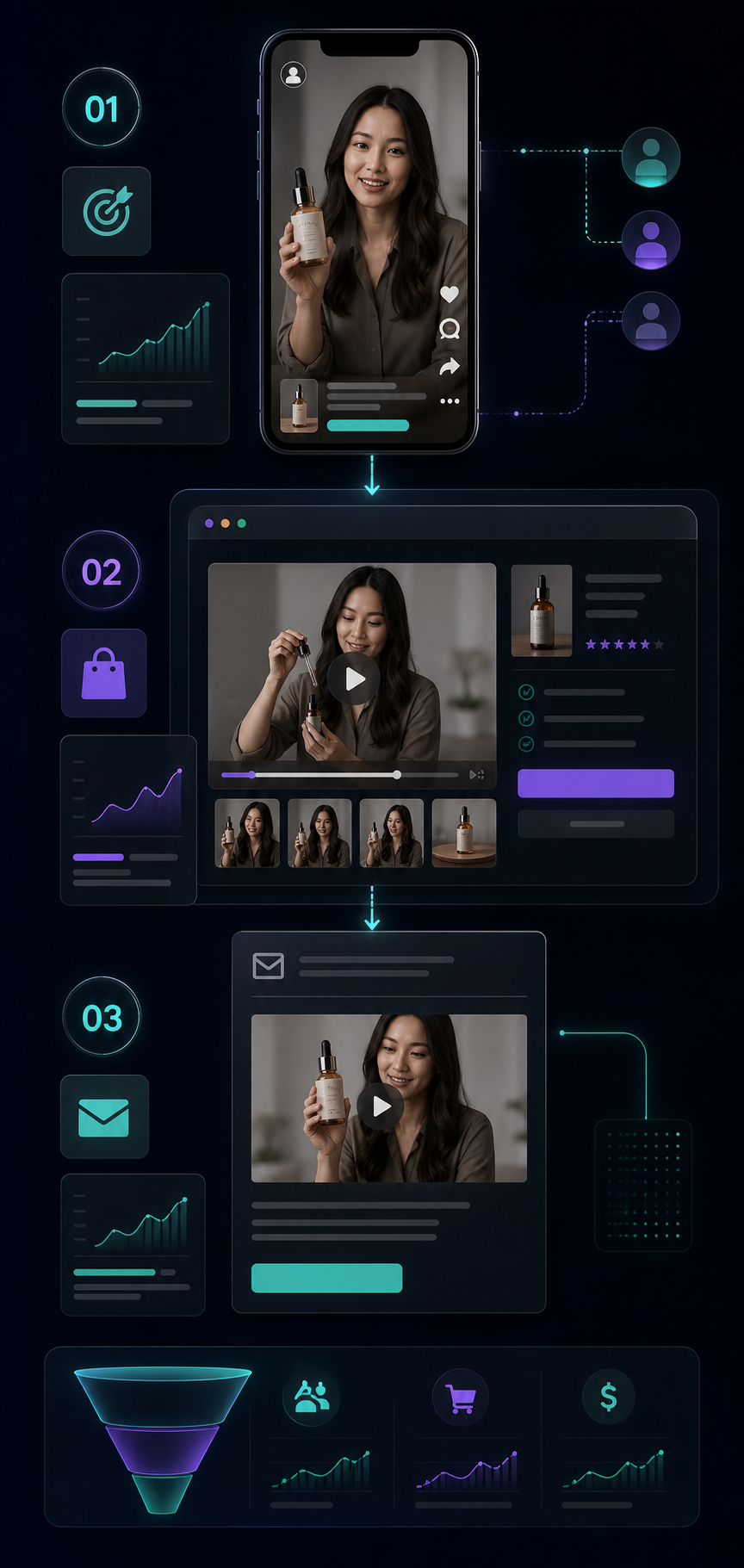
Where I use the finished videos
I like that this workflow is not limited to ads. The same video can move through the rest of the funnel if I frame it correctly.
- Ads: the short version tests the hook
- Product pages: the longer version explains the product
- Email: the same clip becomes a teaser or reminder
- Launches: the video creates a quick visual story when the product is new
That is also why I do not treat UGC-style video as a replacement for every other asset. It is one layer in the funnel. It works best when the store already has enough product context to support the video.
If the product photos need work first, I would fix that upstream with How to Build a Shopify Photo Workflow for Try-Ons, Mockups, and Video and How I Turn One Product Photo Into Try-On, Lifestyle, And Ad Assets. If I want the more specific version of the matrix idea, I would pair this article with How I Build a Shopify UGC Video Test Matrix and How I Turn One Shopify Product Brief Into UGC Video Variations.
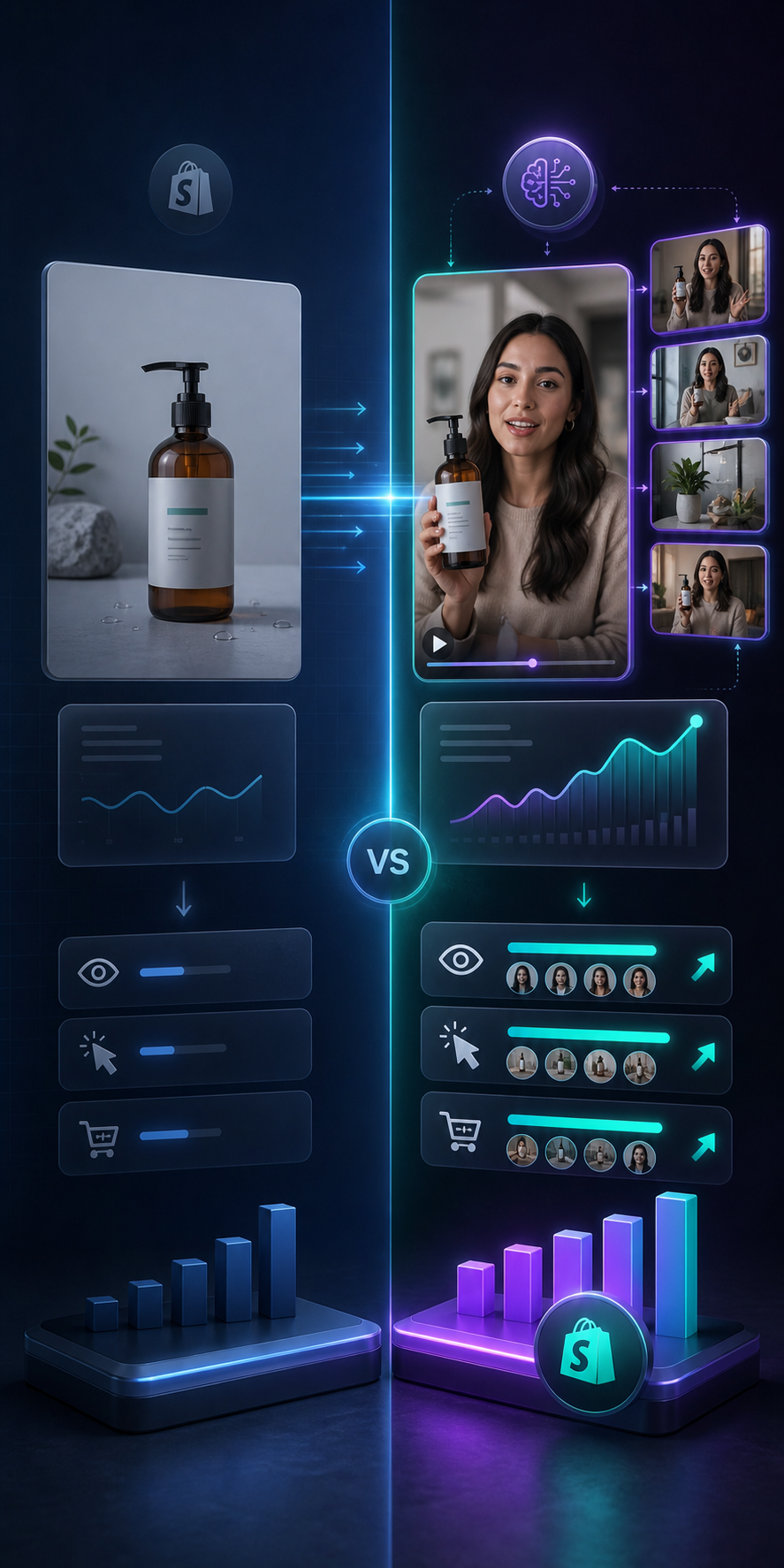
What I still do manually
AI reduces the boring part, but it does not remove judgment. I still decide:
- Which product angle deserves the first test
- Which claim is safe to make
- Which scene looks credible for the audience
- Which CTA feels like the next logical step
That is also where a product like Supra UGC Maker is more practical than a one-off image tool. It lets me keep the project reusable. I can reorder clips, trim them, regenerate a scene, and keep iterating without rebuilding the entire asset set.
The best part is that the workflow stays useful even when the first idea is wrong. If the opening hook is weak, I do not need a new shoot. I just swap the hook. If the scene feels too polished, I can pick something more grounded. If the voice sounds off, I can adjust the tone and keep the rest of the structure.

When I would still choose a real creator
I would not use AI UGC for every job.
- You need lots of creative quickly
- The product is easy to show visually
- The goal is to learn which hook works
- The team is small and the budget is tight
Prefer a real creator when:
- The testimonial is the point
- The brand leans heavily on personality and community
- You need a very specific lived experience
- The performance depends on trust more than speed
That trade-off matters. I do not think the right answer is AI instead of creators. I think the better answer is AI for structured testing, creators for proof and community. When I keep that boundary clear, the workflow stays honest and the results are easier to interpret.
The version I would ship first
If I were starting from scratch today, I would not ask for twenty ideas. I would ask for one solid product brief, four hooks, two scenes, and a simple pass/fail rule.
That gets me to eight videos fast enough to compare, and it keeps the work focused on the one thing that matters: which message makes shoppers pay attention.
If you want to try the same approach, start with Supra UGC Maker or install it from the Shopify App Store. The free plan is enough to draft the first batch, and that is usually all I need to know whether a product deserves a bigger creative run.

Comments
Post a Comment